How Foundational SEO Work Increased Organic Revenue by 69% in Four Months
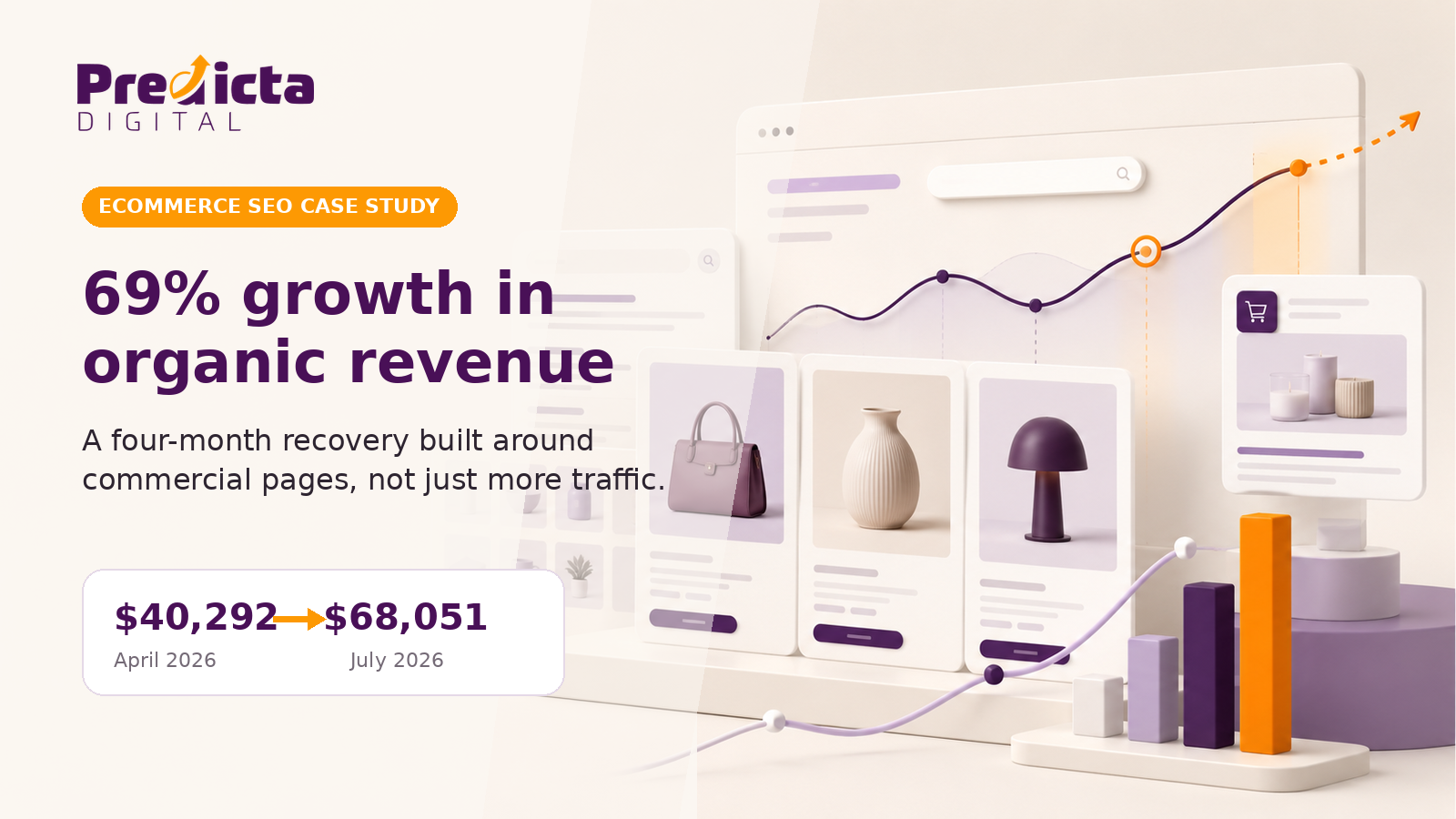
An ecommerce SEO recovery built around commercial pages, not simply more traffic
Results: 69% increase in organic revenue and 36% increase in organic clicks
When I took over this ecommerce SEO account in March 2026, organic revenue had been declining for some time.
There were reasonable explanations for the fall. Attribution problems were making the channel data difficult to interpret, while demand across the wider industry had also softened.
Both issues needed to be considered. But after auditing the account, I did not believe they explained the entire decline.
There were still substantial opportunities within the website itself, particularly across the category and product pages responsible for generating revenue
The results

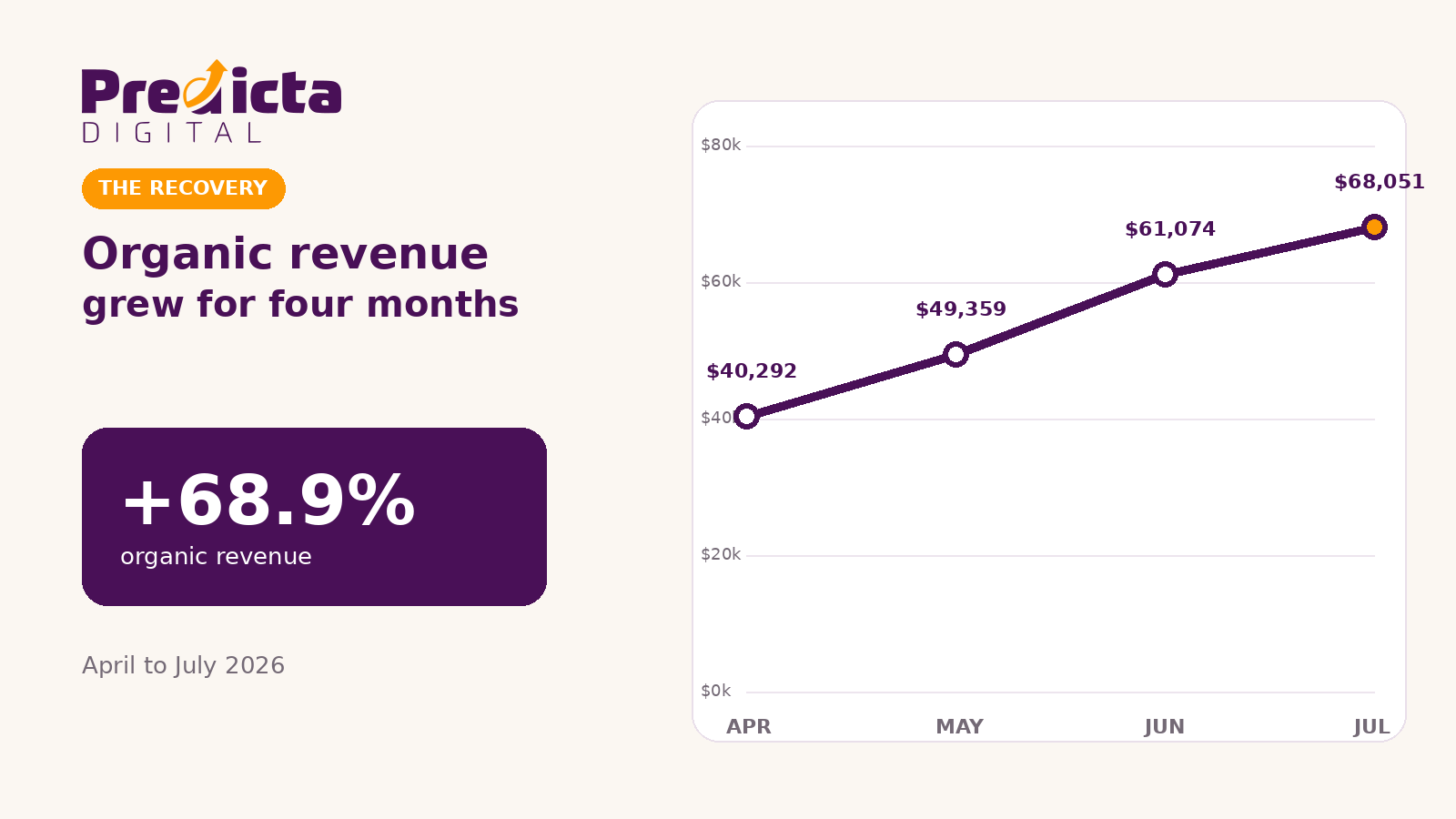
Between April and July 2026, revenue attributed to organic search in BigCommerce increased for four consecutive months:
| Month | Organic Revenue | Monthly Growth |
|---|---|---|
| April 2026 | $40,292 | Baseline |
| May 2026 | $49,359 | ▲ +22.5% |
| June 2026 | $61,074 | ▲ +23.7% |
| July 2026 | $68,051 | ▲ +11.4% |
Over the same period:
• Organic revenue increased by 68.9%
• Google Search Console clicks increased from 2,991 to 4,066, a 36% rise
• GA4 organic sessions increased by 21%
• Average organic position improved from 12.4 to 11.7
• The organic revenue gap against the previous year narrowed from 42% in April to 7.1% in July
BigCommerce, Google Search Console and GA4 each showed the same underlying recovery pattern.
The challenge
This was not an account where the answer was simply “publish more content.”
The website already had a substantial number of indexed product, category, finder and blog pages. The greater problem was that the existing commercial pages were not consistently earning the visibility or click-through rates they should have been.
The account also had several complicating factors:
• Organic revenue and transaction volume had been declining
• Bot traffic was inflating Direct visits and distorting channel-level analysis
• GA4 was capturing only part of the store’s total traffic and revenue
• Commercial pages had weak or underperforming search snippets
• Product feed issues were limiting visibility across organic and paid shopping surfaces
• SEO work needed to be prioritised across hundreds of potential pages
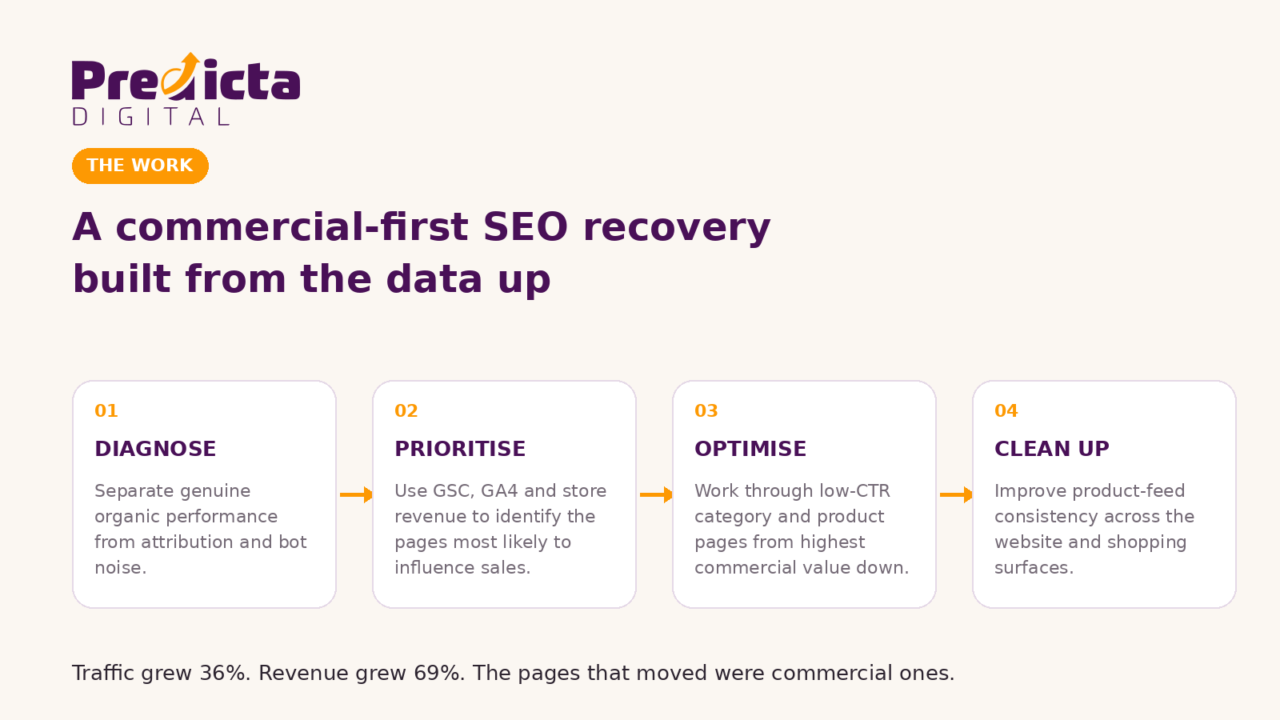
The first job was therefore diagnostic: separating genuine organic performance from attribution noise and identifying which pages had the greatest potential to influence revenue.
What I found
The audit revealed that the site did not need one dramatic intervention. It needed a disciplined sequence of foundational improvements.
Google Search Console showed a large group of pages receiving substantial impressions but generating comparatively few clicks. A low-CTR audit identified 657 URLs requiring review.
GA4 and BigCommerce data were then used to distinguish pages with genuine commercial value from those generating visibility without meaningful revenue.
This changed the order of work.
Rather than treating every underperforming URL equally, I prioritised the categories and products with the strongest combination of:
• Existing search demand
• Commercial relevance
• Revenue potential
• Ranking proximity
• Impressions without sufficient clicks
• Product availability and feed quality
The work started with the pages most likely to affect sales.
The SEO work

Commercial page prioritisation
Category and product pages were prioritised using combined Google Search Console, GA4 and BigCommerce findings.
This prevented high-traffic informational pages from dominating the plan simply because they attracted more clicks. Commercial importance determined the sequence.
Low-CTR optimisation
I worked from the top down through the 657-row low-CTR audit.
Titles and descriptions were reviewed according to page type, search intent, current impressions, rankings and revenue opportunity. The objective was not to rewrite every snippet at once. It was to improve the pages where stronger search visibility and click-through rates could contribute to sales.
Category page improvements
Priority category pages were strengthened to better match the way customers searched for products.
The work included clearer page targeting, improved copy, stronger internal linking and more useful pathways into product selection.
Product page optimisation
Product-level opportunities were assessed using search visibility alongside store performance data.
This helped identify commercially valuable products that were generating strong revenue when discovered but were not receiving enough organic exposure.
Product feed cleanup
The product feed was also reviewed and cleaned up, including issues involving categorisation, titles, product identifiers, brands and compatible products.
This supported better consistency between the website, Google Merchant Centre and shopping-related search experiences.
Measurement cleanup
Direct traffic had initially been considered a possible organic attribution issue. Further analysis showed that much of the unusual Direct growth was bot traffic rather than displaced organic visits.
This distinction mattered. It meant the recovery could be evaluated against BigCommerce organic revenue, Google Search Console clicks and GA4 organic behaviour without treating inflated Direct visits as genuine customers.
Why July mattered more than June

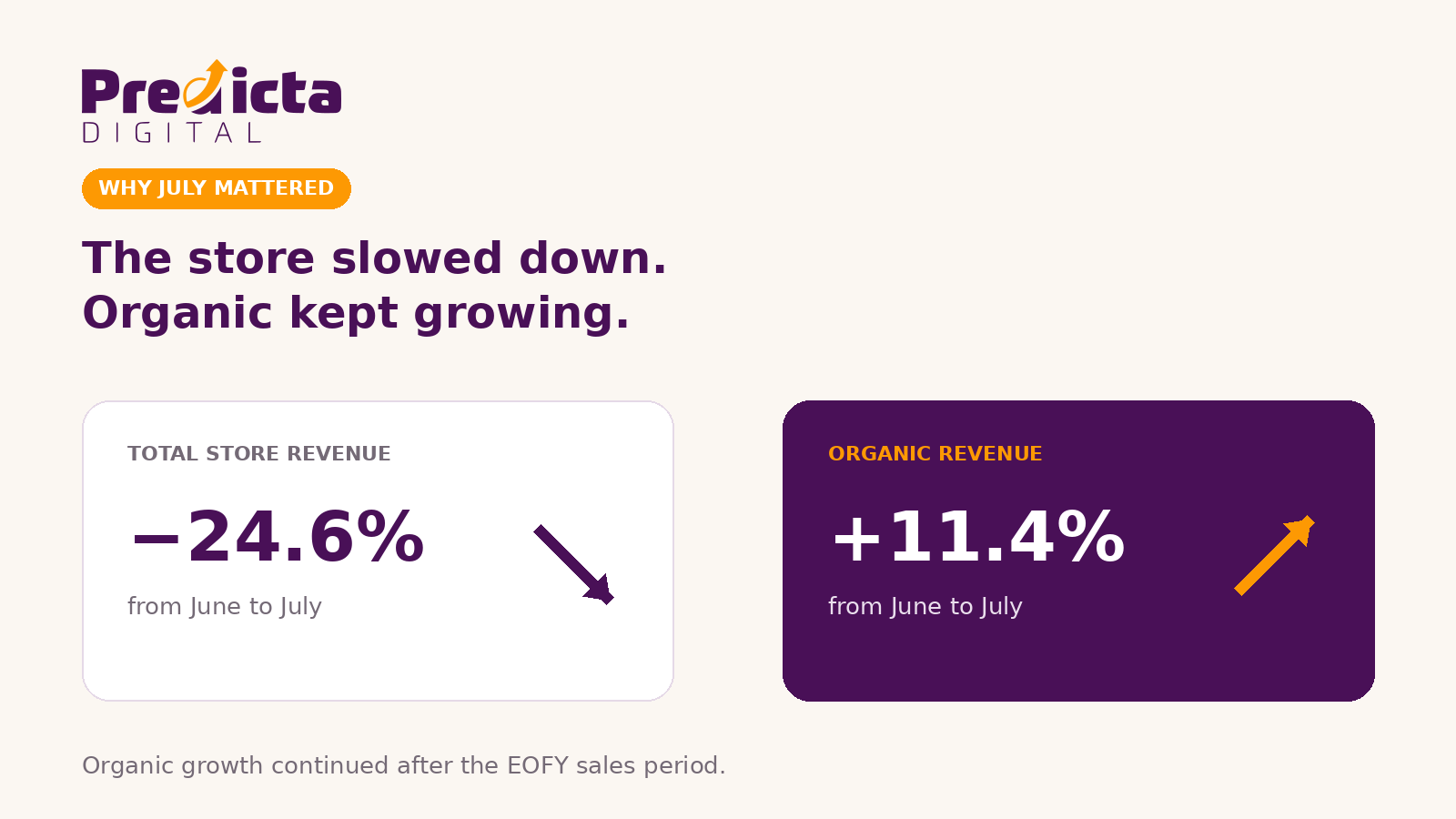
June was an exceptionally strong month for the store because of the end-of-financial-year sales period.
A fall in total revenue during July was expected, and total store revenue did decline by 24.6%.
Organic search moved in the opposite direction.
While the store as a whole contracted, organic revenue increased by another 11.4%, rising from $61,074 to $68,051.
That is the result I consider most meaningful.
It suggests the organic improvement was not simply being carried by a store-wide promotional spike. The channel continued recovering even when the wider sales environment became less favourable.
AI platforms are a small but growing slice of this
Traditional organic search drove this recovery, but it was not the only search surface that moved.
Revenue attributed to ChatGPT and other LLM referrals grew 144.7% year-on-year, from $541 to $1,323, with users up 80% over the same period. It is a small base, and I want to be upfront about that: 108 users and just over $1,300 in revenue is not a channel this account can lean on yet.
What makes the number worth watching is the contrast with Bing, which fell in the same window: users down 49.2%, revenue down 52.4%. One AI-adjacent surface grew while a traditional one weakened. That is the pattern we track deliberately as part of AI SEO work on ecommerce accounts, because it tends to show up months before it is large enough to matter to revenue on its own.
Commercial pages drove the recovery
The objective was never to generate traffic for its own sake.
Organic clicks grew by 36%, but organic revenue grew by 69%. Revenue therefore increased considerably faster than search traffic.
That difference matters. It indicates that the pages gaining visibility were not only informational articles attracting early-stage visitors. The improvements were reaching category, finder and product pages with a more direct relationship to purchasing.
A recovery, not a boom
By July, organic revenue was still 7.1% below the same month in the previous year. Organic clicks also remained below their previous-year level.
This was not a complete turnaround, and it would be misleading to present it as one.
What changed was the direction of travel:
• Four consecutive months of organic revenue growth
• A narrowing year-on-year revenue gap
• More clicks reaching commercially valuable pages
• Organic growth continuing through a weaker month for the store overall
The account moved from sustained decline into measurable recovery.
What happens next
The next phase is focused on building on that recovery rather than assuming the work is finished.
Priorities include:
• Continuing through the remaining low-CTR commercial pages
• Expanding and strengthening the category architecture
• Improving internal links to high-revenue categories
• Resolving remaining product feed gaps
• Strengthening product and organisation structured data
• Monitoring revenue, orders and product-level performance rather than relying on traffic alone
Is your ecommerce SEO traffic generating revenue?
More organic traffic does not automatically mean more sales. The more useful question is whether the right category and product pages are gaining visibility.
If your ecommerce revenue is declining, flat or difficult to interpret because of attribution problems, our Melbourne-based SEO team can help identify what is genuinely happening and where the strongest recovery opportunities sit.